Telangana G+3 Indiramma Housing Project in Hyderabad 2026!
The Telangana G+3 Indiramma Housing Project is an affordable housing initiative planned under the Indiramma Illu Housing Scheme for low-income families living in Hyderabad bastis and other urban areas. The project focuses on providing permanent homes without forcing families to move far away from their current localities.
Under this model, the government plans to develop G+3 housing buildings, which means ground floor plus three floors. Telangana G+3 Indiramma Housing Project in Hyderabad helps poor families get affordable homes near jobs, schools, transport, and essential city facilities.
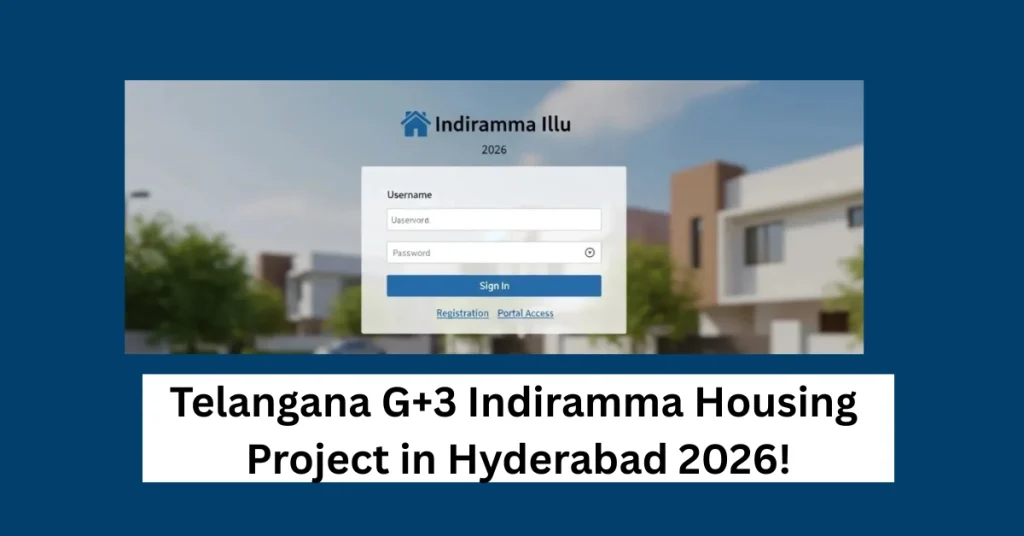
What Is Telangana G+3 Indiramma Housing Project?
The G+3 Indiramma Housing Project is a city-focused housing plan for families who do not own a house and cannot afford private property in Hyderabad.
The main idea is to provide safe and affordable homes to eligible citizens while reducing the problem of slum housing. Instead of shifting people to distant locations, the scheme gives importance to in-situ rehabilitation, where residents may get housing in or near the same area where they already live.
Main Highlights of the Project
| Particular | Details |
| Project Name | Telangana G+3 Indiramma Housing Project |
| State | Telangana |
| Main Area | Hyderabad bastis and urban settlements |
| Housing Type | G+3 apartment-style housing |
| Main Beneficiaries | Low-income and homeless families |
| Financial Support | Up to ₹5 lakh for eligible beneficiaries |
| Main Purpose | Affordable housing without displacement |
| Application Mode | Online/offline as per government process |
Objectives of the Scheme
The main purpose of this housing project is to give poor urban families a stable and dignified place to live. Many families living in bastis depend on nearby work opportunities, small businesses, schools, markets, and local transport.
The project aims to:
Provide affordable pucca houses to eligible families
Improve living conditions in urban slum areas
Reduce displacement of poor residents
Protect existing livelihoods and community connections
Use city land more efficiently through vertical housing
Support homeless and landless families
Promote safer and cleaner residential spaces
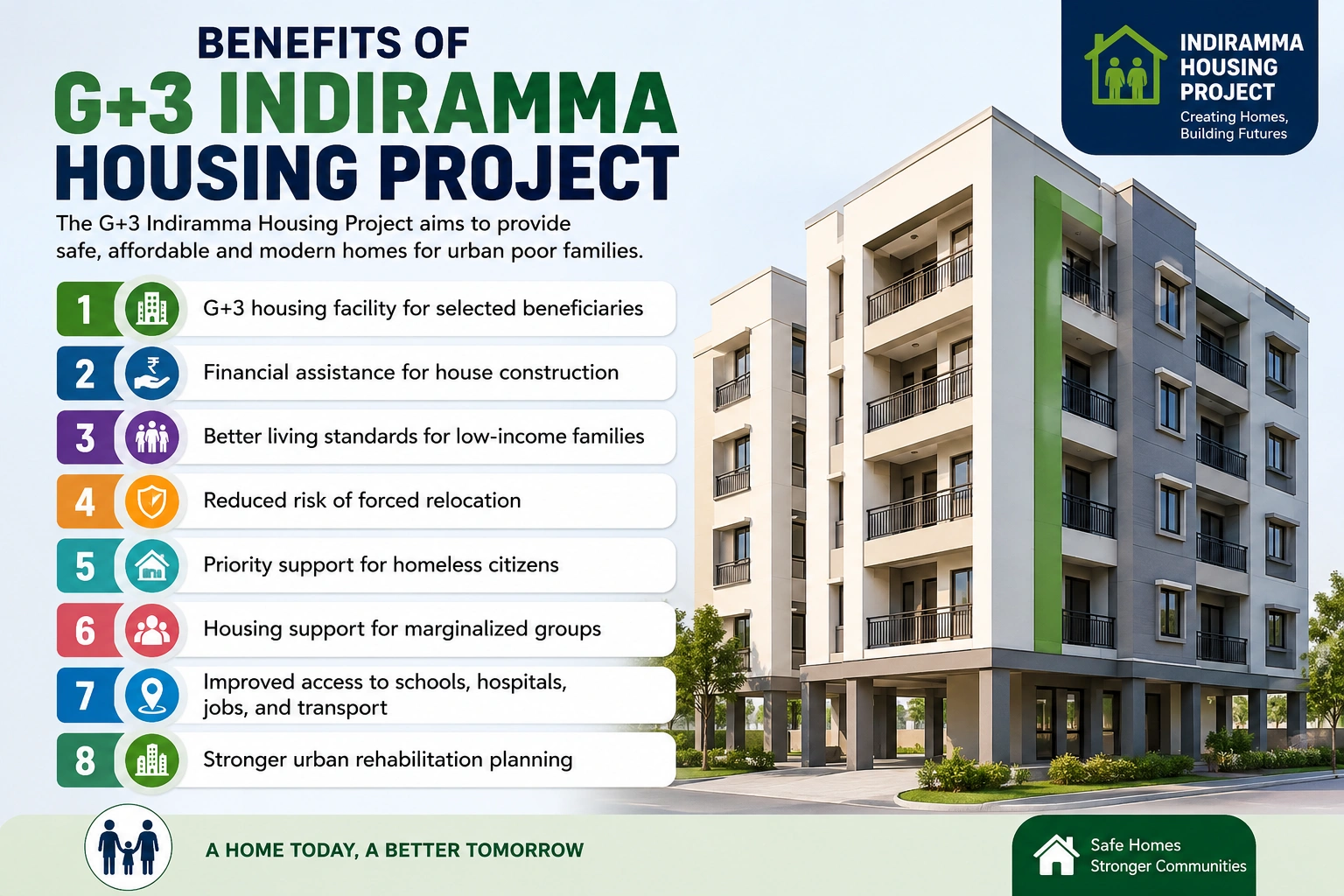
Benefits of G+3 Indiramma Housing Project
Eligible citizens may receive several benefits under this project. The most important benefit is access to a permanent home in an urban location.
Key benefits include:
G+3 housing facility for selected beneficiaries
Financial assistance for house construction
Better living standards for low-income families
Reduced risk of forced relocation
Priority support for homeless citizens
Housing support for marginalized groups
Improved access to schools, hospitals, jobs, and transport
Stronger urban rehabilitation planning
Why G+3 Housing Model Is Important
The G+3 model is useful in cities like Hyderabad because land is limited and expensive. Building single houses for every beneficiary in urban areas is difficult, especially in crowded bastis.
By using a ground-plus-three-floor structure, the government can provide more homes on the same piece of land. This model also helps maintain the local community structure, which is very important for families who depend on nearby work and support systems.
Eligibility Criteria
To apply for the Telangana G+3 Indiramma Housing Project, applicants may need to meet the following conditions:
Applicant must be a permanent resident of Telangana
Applicant should belong to a low-income family
Applicant should not own a house anywhere in India
Applicant should not have received benefits from another housing scheme
Homeless and landless families may get priority
Annual family income should be within the limit fixed by the government
Applicant must provide valid documents during verification
Who May Not Be Eligible?
Some applicants may not qualify for this housing project if they do not meet the required conditions.
People may be considered ineligible if:
They already own a house or residential property
They have received benefits from another government housing scheme
Their family income is above the allowed limit
They submit false or incorrect documents
They are not permanent residents of Telangana
They fail the official verification process
Documents Required
Applicants should keep the following documents ready before applying:
How to Apply for Telangana G+3 Indiramma Housing Project
Applicants can apply through the official process announced by the Telangana government. The application may be accepted online or through local government offices, depending on the latest instructions.
General application steps:
Visit the official housing scheme portal or concerned government office.
Open the Indiramma Housing application section.
Fill in personal, family, income, and address details.
Upload or submit the required documents.
Review all information carefully.
Submit the application form.
Save the application number for future tracking.
Wait for verification and beneficiary selection.
Application Verification Process
After submission, the application goes through official checking. Government officers may verify the applicant’s income, residence, housing status, and documents.
Only eligible applicants who pass the verification process are considered for final approval. Beneficiary selection may depend on government rules, local surveys, priority categories, and availability of housing units.
Grievance Registration
If an applicant faces any issue related to application status, document verification, beneficiary list, or benefit release, they can submit a grievance through the official complaint process.
Common grievance reasons include:
FAQs
Conclusion
The Telangana G+3 Indiramma Housing Project is an important step for urban poor families who need safe and affordable housing in Hyderabad. Its biggest strength is that it focuses on housing without displacement. For families living in bastis, staying near work, schools, hospitals, and transport is just as important as getting a house.
If the project is implemented properly, it can improve living standards, reduce slum pressure, and provide long-term dignity to thousands of families in Telangana.