Indiramma Illu Plan 2026: Housing Design, Construction Guide
The Indiramma Illu Plan 2026 is an ambitious initiative by the Telangana government aimed at providing permanent, safe, and affordable housing for eligible families. This government-backed housing scheme not only offers financial assistance but also sets clear construction and design guidelines to ensure quality homes with a focus on durability, safety, and well-being for beneficiaries. Indiramma Illu Plan 2026 guide covers housing design, layout & construction details, helping beneficiaries understand structure, planning & development process.
Overview of the Indiramma Illu Plan
The Indiramma Plan is part of Telangana’s efforts to help economically disadvantaged families secure permanent homes. The scheme aims to provide eligible families with houses built to standard safety norms and equipped with basic amenities. The government offers financial support up to ₹5 lakh, which is disbursed in stages as construction progresses.
House Design and Layout Specifications
The houses under the Indiramma plan follow a standard design and layout approved by the government. While slight variations may occur based on land size or specific local requirements, the basic features of the home include:
Typically one or two bedrooms.
A hall or living space.
A designated cooking area.
A toilet and bathroom are included for basic hygiene.
Proper airflow and natural light are ensured.
Houses are built with a strong foundation and RCC roofing to ensure long-term safety.
The goal is to create a safe and sustainable living environment for beneficiaries, offering both functionality and comfort.
Construction Guidelines
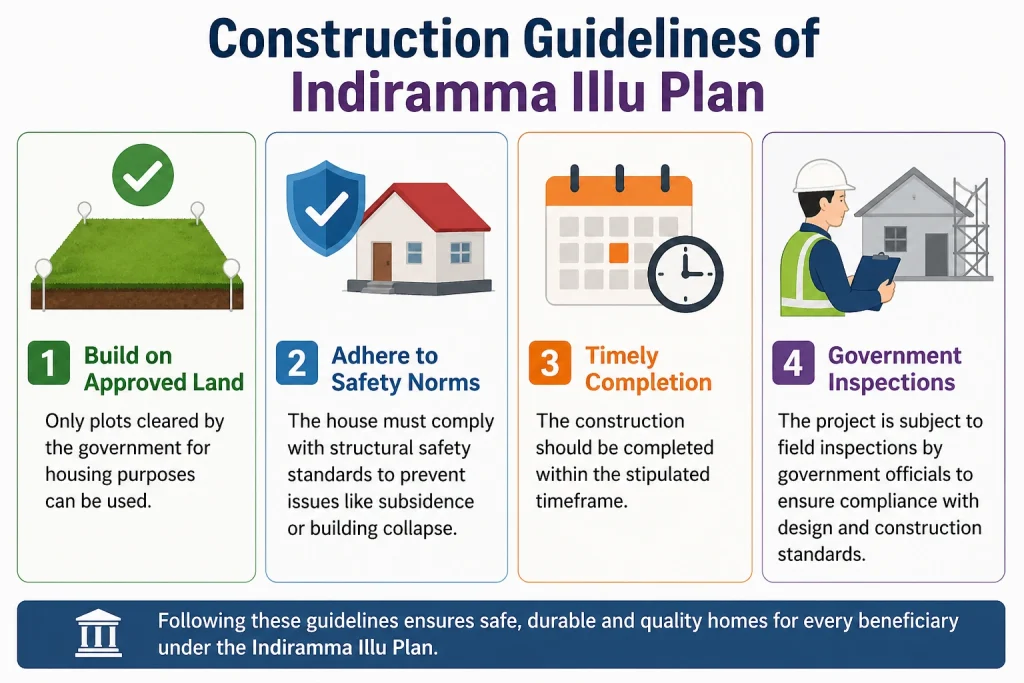
To ensure the successful completion of the homes, the Indiramma Illu Plan includes strict construction guidelines. These guidelines require beneficiaries to:
Build on approved land: Only plots cleared by the government for housing purposes can be used.
Adhere to safety norms: The house must comply with structural safety standards to prevent issues like subsidence or building collapse.
Timely Completion: The construction should be completed within the stipulated timeframe.
Government Inspections: The project is subject to field inspections by government officials to ensure compliance with design and construction standards.
The disbursement of financial aid is staged, and the government releases funds only when specific construction milestones—such as foundation, roof, and final completion—are achieved.
Financial Assistance Breakdown
Financial assistance under the Indiramma Illu Plan is structured to support the construction in phases. The total amount provided can reach up to ₹5 lakh, but this is released in stages, tied to progress on the construction:
Direct Benefit Transfer (DBT): Payments are made directly to the beneficiary’s bank account, ensuring transparency and eliminating the possibility of middlemen.
Phase-based Payments: The funds are released in stages corresponding to the construction milestones, such as the completion of the foundation, roof, and final house completion.
This method ensures that the funds are used efficiently and construction is progressing as planned.
Eligibility Criteria
To qualify for the Indiramma Plan, applicants must meet the following conditions:
Permanent Resident of Telangana: Only residents of the state are eligible.
Economic Need: The applicant must come from an economically weaker section (EWS).
No Existing House: The family must not own a permanent house.
Valid Aadhaar and Bank Account: Beneficiaries must have a valid Aadhaar card and a bank account for financial transactions.
No Previous Housing Benefits: Applicants who have benefited from other government housing schemes are ineligible.
Eligibility verification is conducted through document checks and a field survey by government officials.
Inspection and Monitoring Process
To maintain the integrity of the construction process, government officials conduct regular inspections at various stages of the building project. These inspections verify key milestones, including:
Each stage is documented, often with photographic evidence, which is uploaded to an official portal for transparency.

Benefits of the Indiramma Illu Plan
The Indiramma Plan offers numerous advantages to beneficiaries, including:
Permanent Shelter: Beneficiaries receive permanent housing, significantly improving their living standards.
Improved Living Conditions: The plan promotes safe, hygienic, and comfortable living spaces.
Basic Sanitation: Each home is equipped with essential sanitation facilities, including a toilet and bathroom.
Financial Support: Families receive the necessary funds to complete their houses without worrying about affordability.
Transparent Monitoring: The process is transparent, ensuring the funds are used appropriately.
How the Indiramma Illu Plan Supports Telangana’s Rural Development
Beyond providing housing, the Indiramma Illu Plan significantly contributes to rural development. By offering affordable homes, the plan helps rural families build a stable, permanent base, which in turn boosts local economies. The project generates employment opportunities, enhances local businesses, and improves overall infrastructure, leading to more sustainable growth in rural areas.
The Role of Technology in the Indiramma Illu Plan Monitoring Process
Future Prospects: Expanding the Indiramma Illu Plan
Given its success, the Indiramma Illu Plan has the potential to be expanded further. There are ongoing discussions about increasing the number of beneficiaries and improving the housing quality even further. Future iterations of the plan could also explore additional services, such as job training for construction workers and eco-friendly building materials, to make the homes more sustainable.
Key Challenges Faced by Beneficiaries Under the Indiramma Illu Plan
Frequently Asked Questions
Conclusion
The Indiramma Illu Plan is a significant step toward improving the living conditions of economically weaker families in Telangana. By offering financial aid, ensuring the construction of well-structured homes, and maintaining transparency, it helps create long-term stability for families. With its impact on rural development, women’s empowerment, and local economies, the plan is a crucial component of Telangana’s growth, with a promising future ahead.